


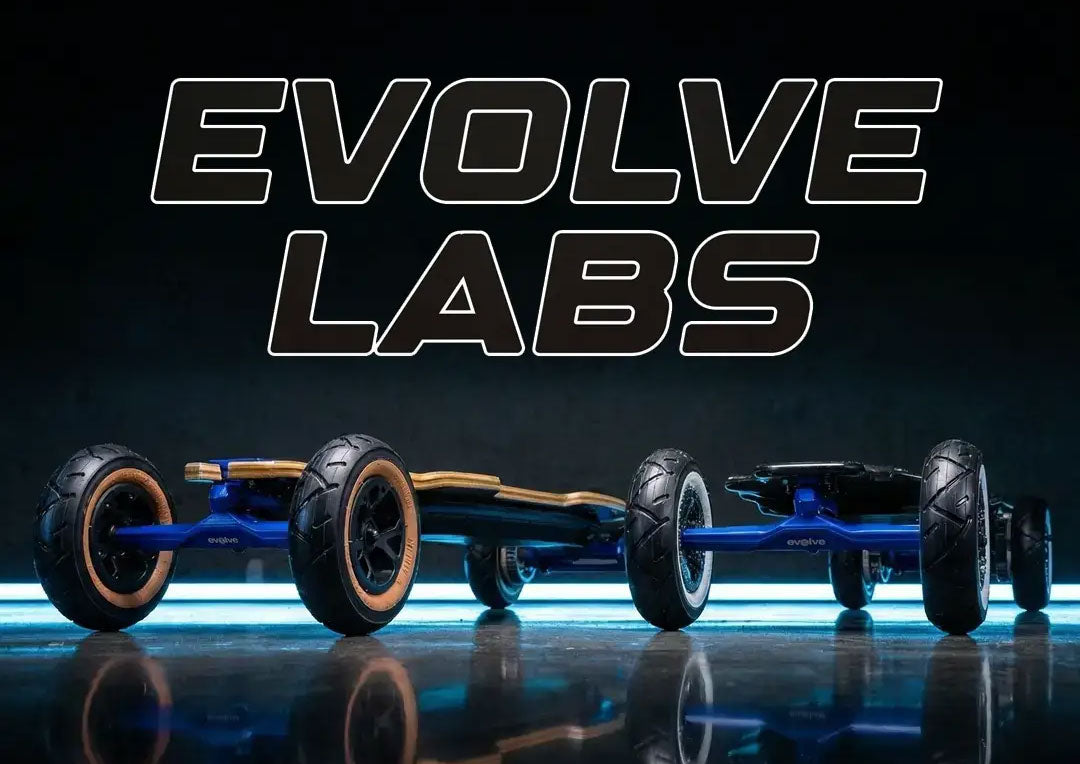
Diablo Bamboo AT vs Diablo Carbon AT: which should you choose?

Diablo Bamboo AT vs Diablo Carbon AT: which one is actually right for you?
Both boards share the same motors, battery and top-end performance. The difference comes down to how the deck feels under your feet and what you plan to do at speed. For most riders who prioritize stability and high-speed confidence, the Diablo Carbon AT is the better choice. For riders who want a more traditional longboard feel with natural flex, the Bamboo AT delivers that in spades.
This comparison breaks down what actually separates these two boards in the real world, so you can make a clear call before you buy.
Where they're identical
Before getting into the differences, it helps to know how much these two boards share. The specs that define performance are the same across both.
- 864Wh Samsung 50S battery
- Dual 6374 motors, 3,500W each (7,000W total)
- EFOC 2.0 controller
- 50 mph top speed, up to 31 miles of range on AT wheels
- 45%+ hill climbing
- 120 kg (265 lb) max load
- SuperCarve 2 trucks, Phaze remote, front and rear LEDs
Torque, braking, range, motor response, hill capability. All the same. What changes is the platform you're standing on.
The deck is where it diverges
The Bamboo AT uses a 3-ply bamboo and 2-ply fibreglass deck, which introduces a natural, controlled flex. That flex absorbs vibration from uneven terrain and gives the board a looser, more surfy feel underfoot. It's a longer deck too, at 39.7 inches, which suits riders who want extra foot space.
The Carbon AT runs a forged carbon fibre deck with an integrated CNC heatsink. It's completely rigid. No flex, no give. At 39.3 inches it's marginally shorter, but the bigger shift is in how it rides. Rigid decks transfer more road feel directly to your feet, which some riders find unsettling at first, but most experienced riders come to prefer at higher speeds because the platform feels planted and predictable.
The Carbon deck also sits in a dropdown configuration, which lowers your center of gravity. That matters more than it might sound when you're moving fast on rough terrain.
Weight and what it means on the trail
The Carbon AT weighs 31.6 lbs. The Bamboo AT comes in at 33.7 lbs. That's roughly a 2 lb difference, which isn't huge but is noticeable if you're carrying the board regularly or loading it into a car after a long session.
More relevant is how each deck handles the dynamic load of riding. The rigid carbon platform doesn't compress under hard acceleration or braking, which means power transfers more cleanly and consistently. On the Bamboo, that slight flex can feel forgiving but can also introduce a small amount of unpredictability when you're pushing the board hard on technical terrain.
Who each board is built for
Choose the Diablo Bamboo AT if:
- You're coming from a traditional longboard background and want familiar flex
- You ride at moderate speeds and prioritize comfort over precision
- Carving on smooth trails and footpaths is your main use case
- You prefer a softer, more forgiving feel when the terrain gets bumpy
Choose the Diablo Carbon AT if:
- You're a heavier rider and want a platform that doesn't compress under load
- You ride at higher speeds and want a planted, confident feel
- Technical terrain, aggressive riding or long descents are part of your regular routes
- You want the lightest possible setup in the Diablo AT range
Riding it across different terrain
In a city like Los Angeles, where you might start on concrete bike paths and transition to gravel or packed dirt in the hills, the Carbon AT's rigidity works in your favor. You feel exactly what the board is doing, and that feedback helps you make better decisions in mixed conditions.
In San Francisco, where steep gradients are unavoidable, the 45%+ hill climbing capability is the same on both boards. But the Carbon's rigid platform and lower center of gravity give it an edge on steep descents, where precise braking and stability matter most.
For riders in Austin or Miami who spend most of their time on smoother sealed paths with occasional grass or gravel, the Bamboo AT's flex makes for a more comfortable long ride. The terrain is less demanding, and the softer deck feel becomes a genuine advantage over a full session.
In New York, where street conditions vary wildly and weight matters for subway stairs, the Carbon's lighter build is a small but real benefit.
The lighting and finish difference
One detail worth mentioning: the Carbon AT has integrated under-body and logo LEDs with smart brake lights, in addition to the standard front and rear LEDs. The Bamboo AT has front and rear LEDs only. If visibility and aesthetics matter to you, the Carbon setup is more polished.
The trucks also differ in finish. Carbon gets black SuperCarve 2 trucks. Bamboo gets silver. Both are the same forged and CNC construction, so it comes down to preference.
Price difference
The Diablo Bamboo AT is priced at $2,899 AUD. The Diablo Carbon AT sits at $3,199 AUD. For US pricing, check the Evolve website directly. The gap between them is meaningful but not dramatic given what the Carbon deck brings to the ride experience.
If the Carbon AT fits your riding style, it's worth the step up. If the Bamboo's flex is what you're after, there's no need to pay more for a characteristic you don't want.
Common questions
Is the Diablo Carbon AT good for beginners?
It's a high-performance board, but the Phaze remote and Evolve app let you dial back acceleration and braking sensitivity. Starting in ECO mode on the Carbon AT is a reasonable approach. That said, if you're brand new to electric skating, the Bamboo AT's natural flex is more forgiving and a gentler introduction to the platform.
Can heavier riders use either board?
Both are rated to 265 lbs. For riders near or at that limit, the Carbon AT is the stronger recommendation. The rigid deck doesn't compress under load, which means more consistent power delivery and braking at maximum rider weight.
What's the real-world range on AT wheels?
Both boards share the same 864Wh battery and return up to 31 miles on all-terrain wheels. Actual range depends on rider weight, terrain gradient and riding mode. Expect less on hilly routes and more on flat sealed paths.
Can I convert either board to street wheels later?
Yes. Both the Bamboo AT and Carbon AT can be converted to street configuration using Evolve's conversion kit. If you think you'll want both setups, the 2-in-1 option includes both wheel sets from the start and saves you the conversion cost later.
The bottom line
If you want the most stable, precise and lightweight option in the Diablo AT range, the Carbon AT is the right call. The rigid deck, lower center of gravity and integrated lighting package make it the better board for aggressive terrain, high-speed riding and heavier riders.
The Bamboo AT is not a lesser board. It's a different tool, one that suits riders who value flex, comfort and a more traditional longboard feel. Know which type of rider you are, and the choice becomes straightforward.
-
Posted in
electric skateboard, evolve
