
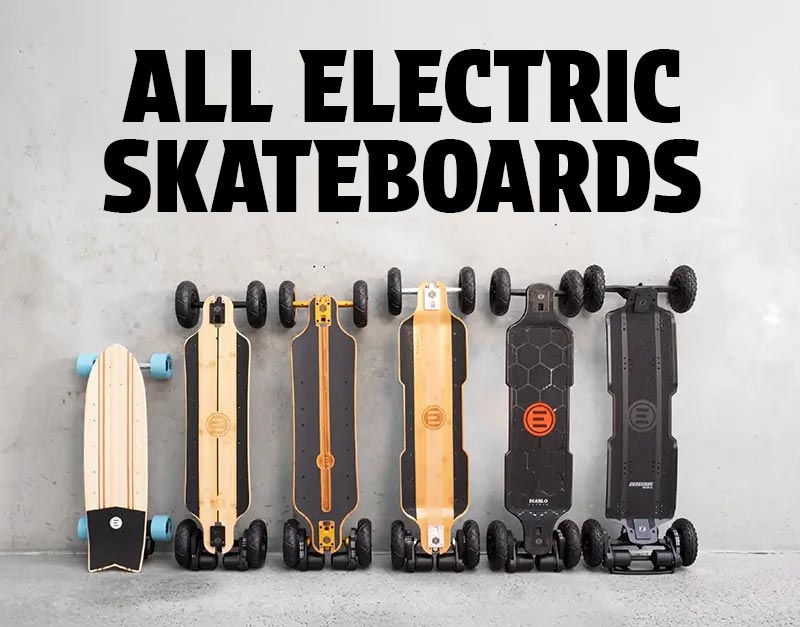
Electric skateboard vs electric bike: which should you buy?
Electric Skateboard vs Electric Bike: Which Should You Buy?
If you want something portable, fun and genuinely useful for short trips, an electric skateboard is the better choice for most urban riders. Electric bikes are great for longer hauls and riders who want a more traditional cycling feel, but they come with trade-offs in cost, size and storage that a board like the GTR Bamboo All Terrain simply does not have.
This is not a simple answer, though. The right choice depends on how far you ride, where you store your gear, what terrain you cover and how much you want to spend. Here is a practical breakdown to help you decide.
The core difference in how they ride
An electric bike rides like a bike. That sounds obvious, but it matters. You sit upright, pedal or throttle, and the handling feels familiar to anyone who has ridden a bicycle. For new riders, the learning curve is close to zero.
An electric skateboard is a different physical experience. You stand, lean and carve. There is a skill component, especially at higher speeds or on rougher ground. Once you have it, though, riding feels natural in a way that bikes rarely do in tight urban spaces. You can weave, carve and stop in a much smaller footprint.
The GTR Bamboo All Terrain runs dual 3000W motors and handles 25%+ gradients, which covers most city inclines with confidence. The bamboo deck absorbs road vibration naturally, which matters when you are commuting over cracked sidewalks or uneven pavement.
Size, storage and portability
This is where electric skateboards have a clear practical advantage.
A standard electric bike weighs 50 to 70 lbs and takes up significant floor space. In a New York apartment, a San Francisco office or an Austin co-working space, that is a real problem. Most e-bikes cannot go under a desk, into a locker or onto a subway car without friction.
The GTR Bamboo All Terrain weighs 26.7 lbs. It fits under a desk, in a carry bag or in a car trunk without rearranging your life around it. If your commute involves a train leg, a building elevator or a crowded lobby, a board is significantly easier to manage.
- Electric bike: 50-70 lbs, needs a rack or secure outdoor storage
- GTR Bamboo All Terrain: 26.7 lbs, fits under a desk or in a bag
Range and real-world commuting distance
Electric bikes typically offer 20 to 60 miles of range depending on assist level and battery size. That covers longer commutes comfortably.
The GTR Bamboo All Terrain delivers up to 19 miles on all terrain wheels. On sealed roads, the street wheel configuration pushes that to around 31 miles. For most urban commutes under 10 miles each way, that is more than enough for a full day without recharging.
Where e-bikes pull ahead is on genuinely long rides, loaded cargo trips or multi-hour sessions. If you are covering 20 or more miles in a single trip, a bike gives you more buffer. For point-to-point city commuting in places like Miami, Los Angeles or Chicago, most riders will never hit the GTR's range ceiling in a day of normal use.
Terrain and riding conditions
The GTR Bamboo All Terrain was built for mixed surfaces. The 7-inch pneumatic tyres handle grass, gravel, dirt and cracked urban asphalt confidently. That gives it genuine versatility beyond what most street-only electric skateboards can offer.
In cities like Los Angeles with long flat stretches and wide bike lanes, a board covers ground efficiently. In San Francisco, the hill-climbing capability matters more, and the GTR handles 25%+ grades with its dual motor setup. In Miami, coastal paths and bike trails are well-suited to the all terrain configuration.
Electric bikes still hold an edge in truly rough off-road conditions or on longer uphill climbs where sustained pedal assist changes the equation. But for the everyday mix of pavement, paths and occasional dirt that most city riders encounter, the GTR keeps up without compromise.
Cost comparison
Entry-level electric bikes start around $800 to $1,000 but reliable mid-range options sit between $1,500 and $3,000. Premium models go well above that.
The GTR Bamboo All Terrain is $1,499 USD. That puts it in the same price window as a quality mid-range e-bike, but with lower ongoing maintenance costs. No chain to lube, no tire punctures to patch on the road, no brake cables to replace. Belt drive systems are simpler to maintain and the board has no mechanical components exposed to the same wear as a bicycle drivetrain.
Instalment payment options make it easier to spread the cost if upfront spend is a factor.
Who should buy which
Buy the GTR Bamboo All Terrain if you
- Commute under 15 miles round trip
- Need to carry your transport into a building, office or train
- Want a board that handles mixed terrain including dirt and gravel
- Ride across varied city surfaces and want something versatile
- Value portability and compact storage above everything else
Consider an electric bike if you
- Commute 20 or more miles daily and need maximum range
- Have secure outdoor bike storage at home and work
- Want to carry cargo or groceries regularly
- Prefer a seated ride and are not interested in learning to skate
People also ask
Is an electric skateboard practical for commuting?
Yes, for commutes under 15 miles round trip. The GTR Bamboo All Terrain offers up to 19 miles on all terrain wheels and handles mixed surfaces including gravel and rough pavement. Its 26.7 lb weight makes it easy to carry into offices or onto public transit.
Which is faster, an electric skateboard or an electric bike?
In production configuration, the GTR Bamboo All Terrain reaches 24 mph on street wheels. Most electric bikes are governed to 20 mph in pedal assist mode. Top speed is similar, but in dense urban traffic where acceleration and maneuverability matter more than outright speed, a board often keeps pace more easily.
Is an electric skateboard cheaper to maintain than an e-bike?
Generally yes. Electric skateboards use belt drive systems with no chain, cables or mechanical brake components. Routine maintenance covers belt checks, bearing cleaning and tyre pressure on all terrain setups. Electric bikes have more mechanical components that wear and require regular servicing.
Can an electric skateboard handle hills?
The GTR Bamboo All Terrain handles gradients of 25% and above, which covers most urban hills including steep residential streets in cities like San Francisco. Heavier riders or very long sustained climbs will reduce range, but for typical city inclines the dual motor setup handles it comfortably.
What is the weight limit on the GTR Bamboo All Terrain?
The GTR Bamboo All Terrain is rated to 220 lbs. Riders close to or above that limit may notice reduced range and slightly longer braking distances. For heavier riders, the Diablo series supports up to 265 lbs.
The bottom line
For most urban riders, the GTR Bamboo All Terrain offers more practical value than an electric bike at a comparable price point. It is lighter, easier to store, handles mixed terrain and costs less to maintain over time.
If your commute is short to medium distance, you live somewhere with limited storage, or you want a board that genuinely handles more than smooth pavement, the GTR Bamboo All Terrain is worth a serious look. Check it out at rideevolve.com.
-
Posted in
electric skateboard, evolve
