

How much does a good electric skateboard cost?
How much should you actually spend on an electric skateboard?
Most people searching this question already know they want something real. Not a toy from a big-box store that dies after six months, but a board worth committing to. The honest answer is that a good electric skateboard costs more than most people expect, and less than most people fear, once you understand what the money actually buys.
The harder question is not what good boards cost. It is what separates a board that holds its value and keeps you riding from one that quietly frustrates you into selling it within a year.
Why the $300 to $700 range is the most expensive place to shop
Budget boards feel like a reasonable starting point. The specs look plausible on paper, the price feels safe, and the photos look fine. But at that price point, you are almost always getting a compromised motor controller, generic cells with no real battery management, and trucks that were not designed for electric skateboarding. The ride is rough, the braking is unpredictable, and the warranty support typically disappears when you need it most.
Riders who start there tend to spend again within a year. Some spend twice. That pattern is common enough that it has its own name in the community: the beginner board tax. You pay it once, learn the lesson, and end up buying the board you should have bought first.
The real cost of a cheap board is not the purchase price. It is the purchase price plus whatever you spend next.
What you actually get above $1,500
Above $1,500, the components change meaningfully. Motors become dual sensored brushless units with proper winding tolerances. Battery packs use name-brand cells with intelligent BMS management that protects against overcharge, over-discharge and thermal runaway. Motor controllers shift from basic PWM to FOC commutation, which is what gives premium boards that smooth, linear throttle feel instead of the jerky surge you get from cheaper setups.
The difference is not academic. You feel it immediately when you push through a corner, hold a hill, or try to modulate your braking on a steep descent. Predictable power delivery and reliable braking are not luxury features. They are what makes a board genuinely safe to ride in traffic.
You also start getting manufacturer support that actually exists. Warranty coverage, replacement parts, firmware updates, real service centers. In the US, Evolve runs a store in Oceanside, CA. That kind of infrastructure matters when something eventually needs attention.
The $2,000 to $2,500 range is where it gets interesting
This is where premium engineering and practical everyday riding overlap. Not everyone needs the biggest battery or the highest top speed. For a lot of riders in cities like Los Angeles, San Francisco, or Austin, the question is not maximum range on a single charge. It is whether the board handles the heat, the hills, the bike lanes, and the sustained daily use without degrading over time.
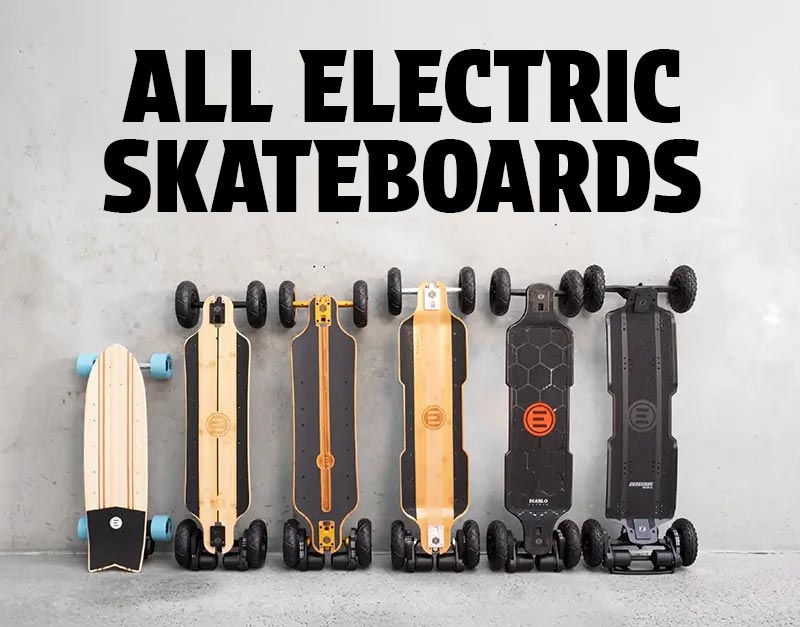
The Fusion Street sits at $2,249 and answers most of those questions cleanly. It weighs 27.5 lbs, which is light enough to carry when you need to without feeling like you are dragging luggage. The 648Wh Samsung cell pack delivers up to 37 miles on street wheels, which handles most real-world riding days with margin to spare. Dual 3,000W motors give you 35%+ hill capability, which matters in San Francisco and anywhere in New York that is not completely flat.
The EFOC 2.0 controller is the same generation used in the flagship Diablo boards. That matters because smooth throttle response and precise braking modulation are not just comfort features on a board like this. They are what let you ride confidently at 31 mph in mixed traffic without second-guessing your setup.
Lighter does not mean less capable
One thing worth understanding about the Fusion is that its lighter weight is not a compromise. The bamboo deck gives it genuine flex underfoot, which absorbs road texture and makes sustained riding far more comfortable than a rigid carbon platform. It carves like something designed for carving, not like a platform that happens to turn.
If you are in Miami riding the coastal paths, or in Austin on long sealed stretches, that flex and the 97mm 76a urethane wheels make the board feel alive in a way that heavier, stiffer setups simply do not. There is a surf-carve quality to it that stiff decks cannot replicate.
The Fusion can also be converted to all-terrain with Evolve's conversion kit, which adds genuine versatility if your riding ever takes you off sealed surfaces. Most riders in city environments will never need it, but it is there if the situation changes.
Where the Diablo makes sense instead
If you are a heavier rider, if you regularly push top-end speed, or if you want the maximum possible range without thinking about it, the Diablo Bamboo Street at $2,849 makes sense. It runs the same EFOC 2.0 controller with a larger 864Wh battery and bigger 6374 motors, giving you up to 50 miles of real-world range and 45%+ hill capability with a 120 kg load capacity.
The Fusion is not a lesser version of the Diablo. It is a different tool. Lighter, more nimble, slightly less range, same speed. The right choice depends on your weight, your terrain, and how much daily range you genuinely need rather than what looks impressive in the specs.
What a good electric skateboard actually costs
If you want something that rides well, lasts, and does not become a source of frustration, budget $1,800 to $2,500. Below that, the compromises accumulate quickly. Above it, you are paying for performance gains that matter a lot to serious riders and not much to everyone else.
For most people in the US riding paved roads, bike paths, and urban streets, the Fusion Street sits in exactly the right position. It is built on the same motor controller and cell chemistry as boards that cost significantly more, carries it in a lighter package, and gives you a riding experience that makes you want to go out again the next day.
That last part is harder to spec out than battery capacity or top speed. But it is ultimately what makes a board worth the money.
-
Posted in
electric skateboard, evolve
