
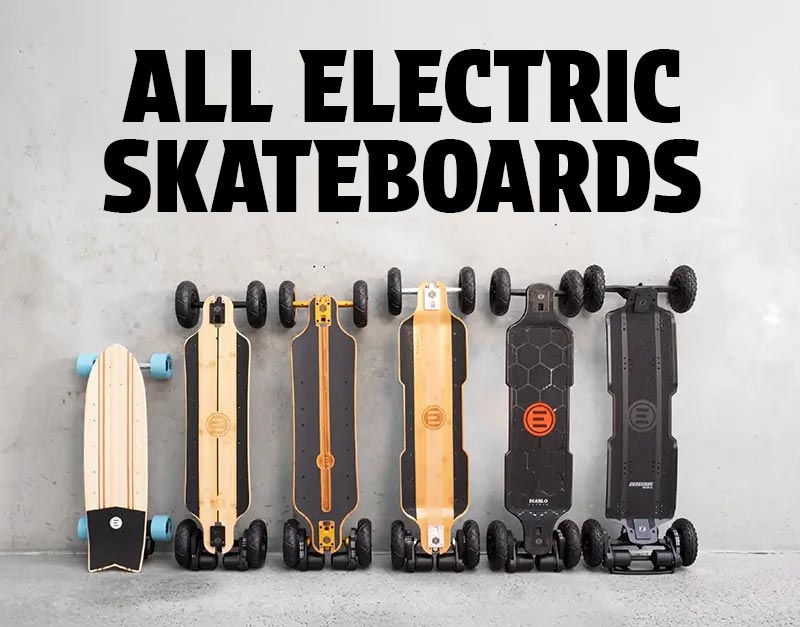
What makes a premium electric skateboard different?

What actually separates a premium electric skateboard from everything else
The difference between a budget board and a premium one is not just speed or battery size. It comes down to how the board behaves under your feet, how it holds up over time, and whether it gives you genuine control across different environments. Most riders figure this out after buying the wrong board once.
If you are trying to understand what you are paying for when you spend real money on an electric skateboard, this breaks it down clearly.
Power delivery matters more than peak numbers
A spec sheet might show impressive wattage, but what you actually feel is how that power reaches the wheels. Cheaper boards often use basic motor controllers that translate trigger input directly into voltage spikes. The result is jerky acceleration, unpredictable braking and a ride that keeps you tense rather than confident.
Premium boards use FOC motor control, which stands for field-oriented control. It smooths out the power curve so acceleration and braking feel progressive and proportional. You push a little, you get a little. You push more, it responds more. That consistency is what lets riders actually carve and cruise instead of just holding on.
The GTR Bamboo runs a FOC controller with Bluetooth connectivity, which also enables real-time diagnostics and over-the-air updates through the Evolve Explore app. The hardware matters, but so does the ability to tune and improve it over time.
The deck is doing more work than most people realise
Deck construction has a direct effect on ride quality, fatigue and control. A rigid deck transfers every crack and seam in the road straight into your feet and knees. Over a 10-mile session, that wears you down.
The GTR Bamboo uses a 3-ply bamboo and 2-ply fibreglass laminate. The bamboo adds natural flex, which absorbs vibration and creates a more forgiving ride. It also responds well to weight shifts, making the board easier to carve and turn intuitively. Riders who come from traditional skating or surfing tend to respond well to this feel because it does not fight you.
That flex also makes the board more forgiving for newer riders building confidence, without sacrificing the stability needed for open road cruising.
Real-world range versus marketing range
Battery capacity numbers in marketing materials are almost always measured in ideal conditions. Light rider, flat ground, low speed, no wind. Real-world range drops when you add hills, heavier body weight, faster speeds or colder temperatures.
A premium board accounts for this honestly. The GTR Bamboo 2-in-1 carries a 504Wh battery with up to 31 miles of real-world street range. That is enough for a full afternoon session or a legitimate long-distance commute in a city like Los Angeles or along the flat waterfront stretches of Miami, where you are not fighting elevation constantly.
In San Francisco or Austin, where hills are unavoidable, the 25 percent-plus hill climbing capability handles the grade without the motor straining. Battery voltage stays more consistent because the system is not being pushed beyond its design limits.
Two setups, one board
One of the clearest marks of a well-engineered electric skateboard is versatility. The GTR Bamboo 2-in-1 includes both street wheels and 7-inch pneumatic all-terrain tires in the box. You are not buying add-ons later. You swap setups based on where you are riding that day.
Street wheels give you faster acceleration, a top speed of 44 mph and lower rolling resistance on asphalt and bike paths. The all-terrain setup drops the speed slightly to 38 mph but opens up grass, gravel, dirt paths and uneven urban surfaces. In a city like New York, where the difference between a smooth bike lane and a rough side street can change within a single block, that flexibility is genuinely useful.
The conversion takes tools and time, but it means you are not limited to one type of riding environment for the life of the board.
Build quality and long-term ownership
Budget boards often cost less upfront but carry hidden costs. Cheaper bearings wear faster. Belts that are not rated for the torque load stretch or snap. Wheels that use low-quality urethane flatspot within months. Remote connections drop.
Premium boards use components selected for durability under real riding conditions. The GTR Bamboo runs forged and CNC-machined SuperCarve trucks, precision bearings and the Phaze remote, which has a CNC aluminium body and a dual-trigger design that keeps throttle and braking on separate controls. The remote feels like a tool, not a toy.
Evolve also backs this with a 12-month warranty and a 14-day money-back guarantee, and riders in the US can get hands-on support through the Oceanside, CA store for service and questions.
Tuning that fits the rider, not the other way around
Premium electric skateboards do not lock you into a fixed power profile. The GTR Bamboo has three riding modes: ECO, SPORT and GTR. ECO softens acceleration and braking for learning or cautious riding. GTR opens up full power for experienced riders who want responsive, punchy performance. The Explore app lets you adjust curves further, so the board can match your weight, riding style and terrain rather than forcing you to adapt to it.
That tunability is what makes the board appropriate whether you are picking it up for the first time or have been riding for years.
What you are really paying for
The honest summary: a premium electric skateboard costs more because every system in it is better specified, more carefully integrated and built to last longer under real riding conditions. The gap is not just felt in the specs. It is felt immediately under your feet, in the first corner you carve, in the way the brakes respond when you need them.
For a rider who wants something capable across both street and off-road environments, reliable enough for daily use and tunable enough to grow with you, the GTR Bamboo 2-in-1 sits at the right entry point into premium territory without requiring a flagship budget to get there.
-
Posted in
electric skateboard, evolve
