

What a decade of electric skateboarding actually changed
What a decade of electric skateboarding actually changed
Ten years ago, an electric skateboard was a novelty with a top speed that felt exciting until you realized how little control you actually had over it. Today the same category includes boards that climb steep hills, carry riders well over 200 lbs, and cover 40 to 80 miles on a single charge depending on setup. The interesting part is not that the numbers got bigger. It is that the entire experience of riding got more predictable, which is the thing that actually matters when you are standing on a board doing 25 mph down a hill in San Francisco.
The battery problem got solved quietly
Early electric skateboards used battery cells that sagged under load, meaning the board that felt fast when fully charged got noticeably weaker as the charge dropped. That inconsistency was the single biggest complaint from early riders, and it made range numbers almost meaningless because performance changed throughout the ride.
Modern lithium cell chemistry, like the Samsung 50S cells used across current battery packs, holds voltage far more consistently under load. A board pulling from an 864Wh pack at 90 percent charge behaves close to identically to the same board at 20 percent charge. That consistency is what turned range anxiety from a real fear into a minor planning consideration. Riders in Austin doing 15-mile commutes stopped thinking about their battery percentage every few minutes, because the board stopped punishing them for using it.
Motors moved from raw power to usable power
A decade ago, more wattage just meant more speed, delivered abruptly. There was little nuance in how that power reached the wheels. Riders either had control or they had a rocket, rarely both.
Dual motor setups changed that, but the real shift came from better controllers. Field-oriented control, or FOC, lets the motor controller manage power delivery smoothly rather than as an on-off switch. Combined with selectable ride modes, eco, sport and more aggressive settings, the same board can behave like a gentle commuter tool or a genuinely quick machine depending on what the rider selects. Dual 3000W or 3500W motors are common now, not because riders need to hit top speed constantly, but because that headroom means the board never feels strained on a climb. Hills that would have stalled a board a decade ago, the kind you find all over Los Angeles and San Francisco, are now a non-event for a well-built setup.
Braking used to be an afterthought
This is the change that mattered most and got talked about least. Early boards braked inconsistently, which made steep descents genuinely stressful. You did not always know how much stopping power you had until you needed it.
Braking response is now tuned as carefully as acceleration. Riders can adjust brake strength through an app, matching it to their weight, their terrain and their confidence level. That single improvement did more for rider safety than any deck material change or motor upgrade. Confidence on a board comes from knowing exactly what happens when you pull the trigger back, and that predictability simply did not exist in the early years of the category.
Decks stopped being an afterthought too
Early boards mostly used whatever deck was available and bolted electronics underneath. There was little engineering thought given to how the deck itself should feel underfoot.
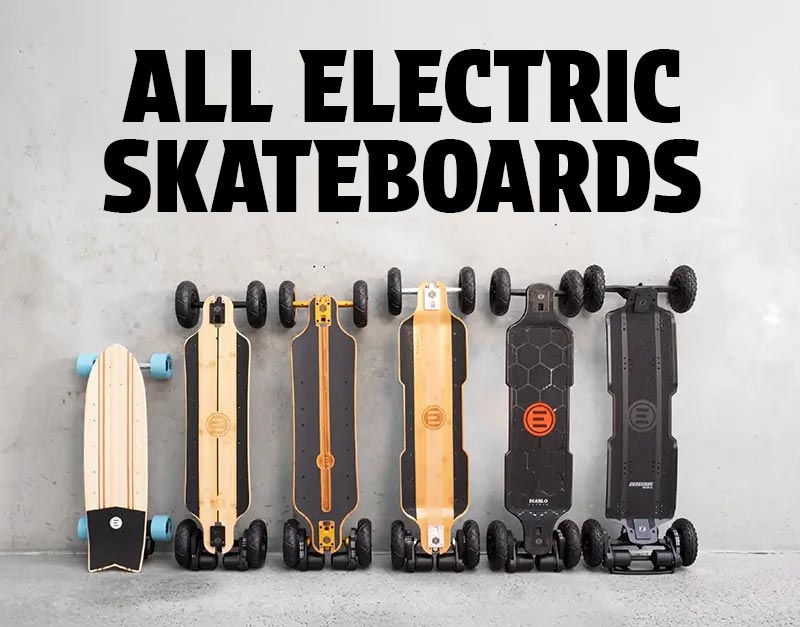
That changed as manufacturers, including Evolve, started designing decks specifically for how power and weight distribute during electric riding. Bamboo decks with fiberglass layers give a flex pattern that absorbs road vibration and encourages a surfy, carving feel, which is why bamboo boards remain a favorite for riders who want a smoother, more intuitive ride. Carbon fiber decks went the other direction entirely, offering a completely rigid platform that stays planted at higher speeds and under harder cornering. Neither approach is objectively better. They serve different riding styles, and the fact that riders now get to choose based on feel rather than accepting whatever showed up is itself a meaningful shift.
All-terrain riding used to mean a different board entirely
A decade ago, if you wanted to ride off pavement, you generally needed a separate, specialized setup. Street boards simply could not handle grass, gravel or dirt without breaking down quickly.
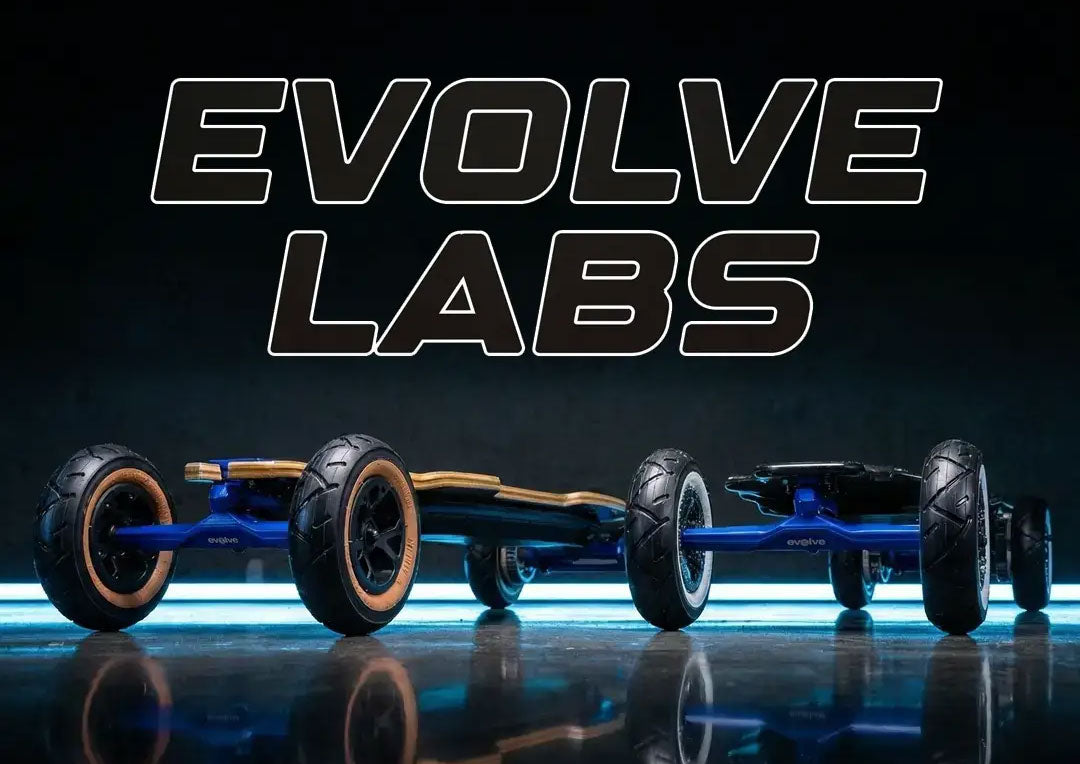
Pneumatic all-terrain tires changed that equation. A 7-inch pneumatic tire absorbs impact and holds traction on loose surfaces in a way that small urethane street wheels never could. More significantly, conversion kits and 2-in-1 setups now let a single board switch between street and all-terrain configurations. That means a rider commuting through New York City streets on a Monday can swap wheels and take the same board onto a dirt trail on the weekend. The tradeoff is real, all-terrain tires draw more current and reduce range noticeably, but the flexibility of one board doing both jobs would have sounded implausible ten years ago.
Data turned riding into something you could actually understand
Apps like Explore By Evolve did something simple but underrated: they gave riders visibility into what their board was actually doing. Battery health, ride history, firmware updates and diagnostics used to be a mystery unless something broke. Now a rider can see exactly how much range a specific route consumed, track wear on components, and get software improvements pushed to a board they already own rather than needing to buy a new one.
That shift from hardware-only thinking to hardware plus software is probably the most underrated change of the decade. It turned electric skateboards from static products into platforms that keep improving after purchase.
What did not change, and why that matters
Despite all of this, electric skateboards are still not waterproof, still require real maintenance, and still demand genuine skill to ride well at speed. No amount of battery chemistry or motor tuning replaces the fundamentals of balance and judgment. Riders in Miami dealing with sudden rain, or anyone riding through a wet New York winter, still need to respect that limitation. The category got smarter, not risk-free.
What changed over the past decade is not that electric skateboards got faster for the sake of it. They got more honest. The range you see is closer to the range you get. The brakes do what you expect. The deck matches the way you actually want to ride. That kind of quiet reliability does not make for flashy marketing, but it is the real reason electric skateboarding moved from a novelty into a legitimate way to get around, whether that is a short hop across a college campus or a real commute through a city built on hills.
-
Posted in
electric skateboard, evolve
