

What it really costs to replace your short car trips

What it really costs to replace your short car trips
Most people calculate the cost of driving by looking at a gas receipt. That number is almost meaningless. The real cost of a short car trip includes depreciation, maintenance, parking, insurance allocated per mile, and the time spent sitting in traffic that a two-mile trip should never require. Once you add all of that up, the math around switching to an electric skateboard for short trips looks very different than most people expect.
The short trip is where cars lose the most money
Cars are efficient on the highway and terrible on short hops. Cold engines burn more fuel per mile. Stop-and-go traffic wears brakes and transmissions faster than steady-state driving. A car that costs nine cents a mile on a long highway trip can easily cost three or four times that on a two-mile trip through city traffic, once you factor in the extra wear and the time lost.
Then there is parking. In a lot of American cities, parking for a short errand costs more than the trip itself. Add insurance, registration and depreciation spread across fewer annual miles, and a lot of the trips people run through downtown Los Angeles, the Mission in San Francisco or Midtown Manhattan are quietly some of the most expensive miles a car ever drives.
What an electric skateboard actually costs to run
Charging an electric skateboard is close to free. A typical battery in the 500 to 900 watt-hour range costs a few cents to fully charge, even at retail electricity rates. Riding it does not wear brake pads, does not need oil changes, and does not require a parking spot beyond a corner of an office or a bike rack.
The real ongoing costs are wheels, bearings and the occasional belt, all of which are cheap compared to anything on a car. Street wheels wear down with mileage the way any wheel does, and all-terrain tires need to be kept at proper pressure, but none of this adds up to a meaningful monthly cost. If you ride an electric skateboard three or four miles a day, five days a week, you are looking at a running cost that is a rounding error next to what the same mileage costs in a car.
Where the comparison actually holds up
This is not an argument that an electric skateboard replaces a car entirely. It replaces the category of trip that a car is genuinely bad at: the two to eight mile hop to the train station, the ride to a coworking space, the loop to a friend's apartment, the last mile from a downtown parking garage to an actual office. These are the trips where a car spends more time parked or idling than moving, and where an electric skateboard with 30 to 60 miles of real-world range covers the entire round trip without coming close to running flat.
Riders in Austin doing a flat three-mile commute along a bike lane are looking at a completely different equation than riders in San Francisco navigating real hills. That is where motor power and hill-climbing capability matter. Boards built around dual motors in the 3,000 watt range per side, with a hill gradient rating above 30 percent, handle city hills without the rider having to push or bail. A flatter city like Austin or Miami puts less demand on the drivetrain, which means even a lighter, more affordable setup handles the daily commute comfortably.
The car you do not have to own twice
A lot of households already have this conversation without framing it as one. It shows up as the decision to keep a second car for short trips, or to pay for rideshare trips that individually feel cheap but add up to real money over a year. An electric skateboard is not a replacement for the family car on a grocery run or a highway trip. It is a replacement for the second car, the short rideshare trip and the fifteen minutes spent finding parking.
In New York, where owning a car at all is often more liability than convenience, an electric skateboard turns a subway connection into a door-to-door trip without the wait. In Miami, where short trips across flat neighborhoods eat up disproportionate time in traffic, the same logic applies. The board is not competing with the car. It is competing with the worst trips the car was ever asked to do.
What actually determines whether this works for you
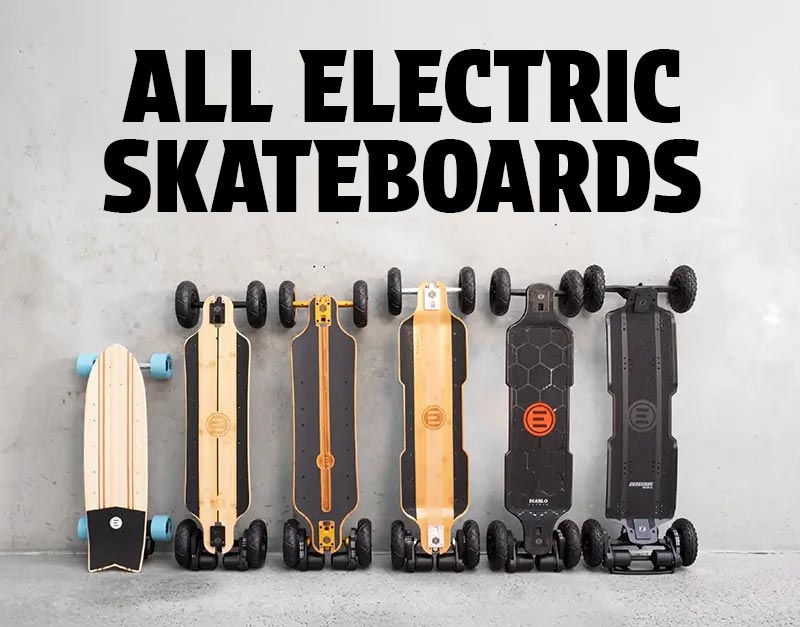
Range and hill performance are the two variables that decide whether an electric skateboard genuinely replaces your short trips or just becomes a weekend toy. If your commute is under ten miles round trip on mostly flat ground, almost any board in Evolve's lineup, from our bamboo boards to our carbon decks, will comfortably cover it with plenty of battery left over. If your route includes real elevation, the extra torque and stability of a carbon deck or an all-terrain setup earns its keep, because a board straining on a hill burns range fast and feels less confident underfoot.
Weather matters too. None of Evolve's boards are rated for wet riding, so anyone commuting through a city with real rain needs a backup plan for those days, whether that is public transit or, yes, the car. The honest way to think about it is not "car versus board." It is "which trips no longer need the car at all."
The honest number
When people ask what it costs to replace their short car trips, they are usually looking for a single dollar figure. There is not one, because it depends on parking costs, insurance allocation and how many of those trips you are actually taking. But the direction of the number is not in question. Cars are expensive precisely on the trips they are worst at, and electric skateboards are cheap precisely on the trips they are built for.
If your daily radius is a few miles, mostly flat, and mostly avoidable rain, an electric skateboard will save you real money within the first few months, not because the board is magic, but because the car was never a good tool for that job in the first place.
-
Posted in
electric skateboard, evolve
